

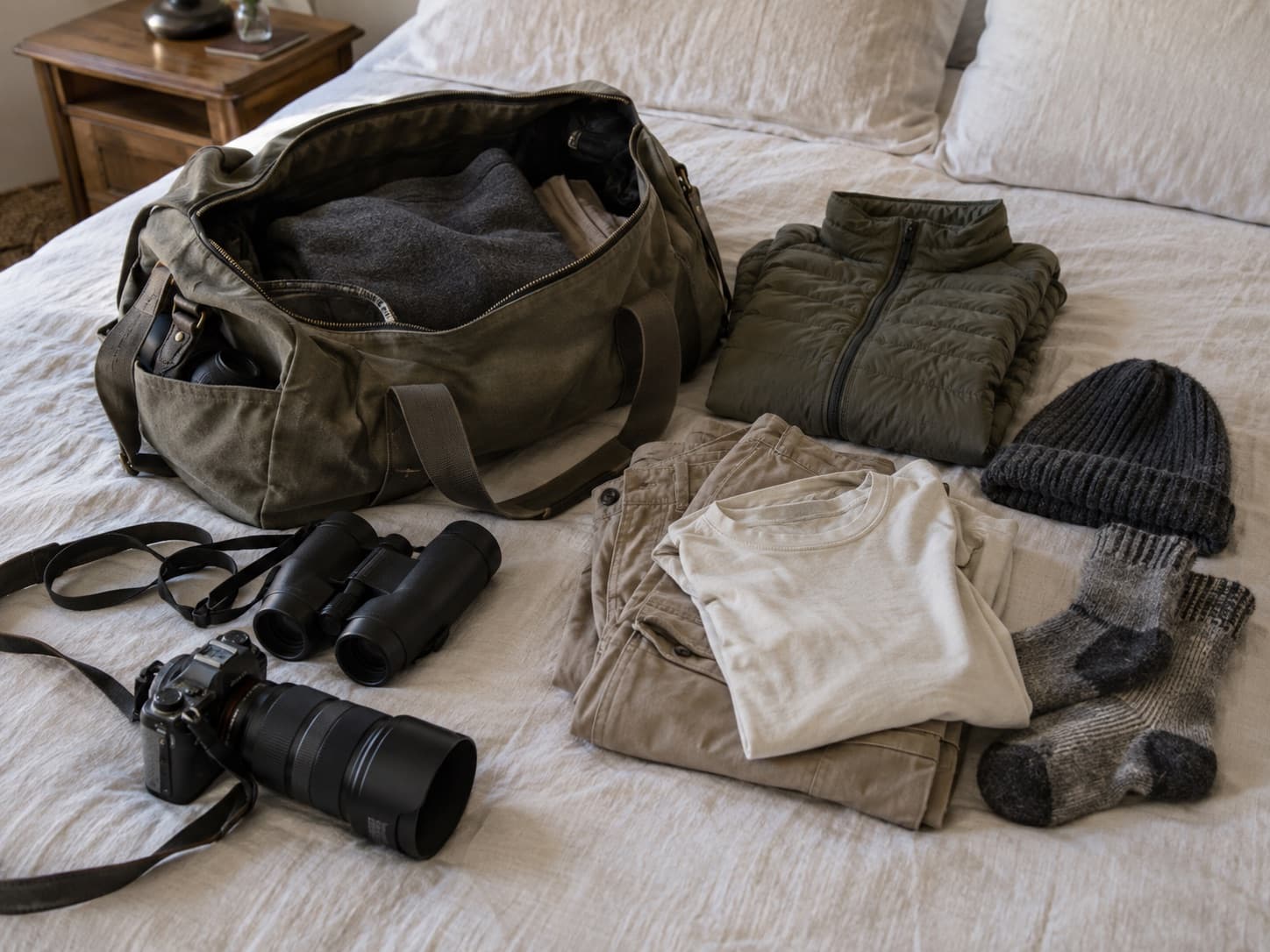
The afternoon forecast can be misleading. A warm winter day in the Lowveld may begin with a very cold ride in an open vehicle, particularly before sunrise.
You are sitting still, the air is moving and the sun has not yet reached you. A few hours later, you may be folding your jacket onto the seat beside you.
Packing for both moments is simpler than it sounds.
Get the layers right
Start with a comfortable long-sleeved top. Add a fleece or wool jumper, then a warm jacket that helps keep out the wind. If you feel the cold easily, a lightweight thermal layer is worth the space.
Wear long trousers, warm socks and closed shoes. A beanie and gloves are small things that can make the first hour much more comfortable. Choose gloves you can manage a camera or binoculars in.
Lodges may provide blankets or hot-water bottles, but check before relying on them.
You probably own most of what you need
There is no need to buy an entirely new safari wardrobe.
Comfortable clothes in muted colours are a sensible choice. Prioritise pieces that layer easily, feel good when you are seated and can be worn more than once.
For vehicle-based game drives, comfortable trainers are usually sufficient. If you have booked a walking activity, ask the lodge what footwear it recommends.
Keep sunglasses, a hat and sunscreen in your day bag. Once the sun is up, you will be glad to have them within reach.
Check the smallest flight on your itinerary
Your international baggage allowance may not apply to a small aircraft transfer.
Safari flights can have tighter limits on weight, bag dimensions and luggage construction. Federal Airlines, for example, publishes specific baggage guidance for its smaller aircraft and recommends soft-sided luggage. Check the requirements for your actual booking before choosing a bag.
Remember to account for camera equipment and hand luggage according to the operator’s rules. If your lodge offers laundry, that can help you pack fewer clothes.
Keep camera equipment manageable
Bring the camera you are comfortable using. A familiar setup is easier to enjoy when an animal appears unexpectedly and the vehicle has just stopped.
For interchangeable-lens cameras, a versatile zoom can save frequent lens changes in dusty conditions. A longer lens helps with distant animals and birds, while a phone is useful for landscapes and moments around camp.
Pack spare batteries, memory cards and something to protect your equipment from dust. Give binoculars a place in the bag too.
Before leaving your room, check the essentials: warm layers, camera, binoculars and sunglasses. Then put your phone away for a while. There is plenty worth seeing before the first photograph.